Website designed with the B12 website builder. Create your own website today.
Start for free
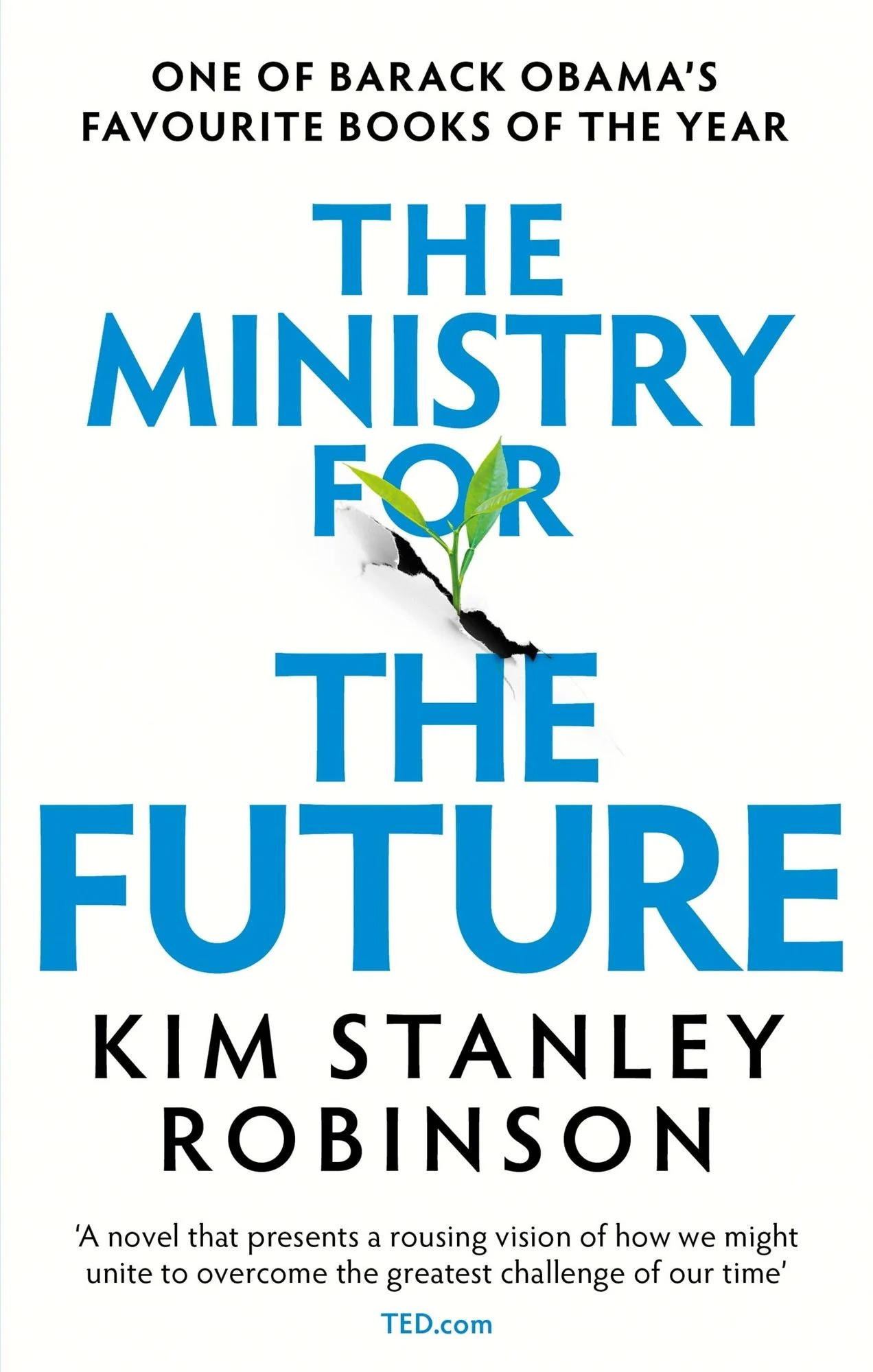
The Ministry for the Future authored by Kim Stanley Robinson has been dubbed one of Barrack Obama's favorite books of 2024. It is a Climate Fiction novel, speculatively exploring the near-future implications of the climate crisis and presenting solutions grounded in scientific research in the realms of global politics, economics, and technology. The book is both a set of warnings and a call to action, blending scientific rigor, political intrigue, and human drama into a compelling narrative.
Thanks for reading Beyond Carbon! Setting, Personal Anecdote
The story unfolds in India, following one of the main protagonists of the book Frank May, an American aid worker who survives a deadly heat wave, which in the world of the book, have been becoming more frequent and severe, causing untold loss of life.
I was able to relate to the story's beginning in some sense, experiencing first hand, the summer heat of Lahore, Pakistan. In the Market-cum-Apartments that my mother grew up in, that my family used to visit when I was a child, we had a rackety generator that would come to aid during load-shedding—scheduled taking away of electricity by the State—reviving with some considerable effort the sole A/C that was in the living room where my grandmother used to rest.
A photo depicting road conditions during a record-setting, severe heat wave in India
Not long before the deadly heat wave that struck India, the book details the unfolding of the Conference of the Parties (COP29). Therein, some delegations raise certain articles and clauses of the Paris Agreement, which allow COP to create new "Subsidiary Bodies for the Implementation of the Agreement". Such subsidiary bodies were previously understood to be committees that would convene during the COP meetings, however given the failure of meeting the targets set by the Agreement and taken stock of during the 'Global Stocktake', it was argued by some government delegations that a new subsidiary of the United Nations, with permanent duties and resources to pursue them, be established. This new agency was charged with defending and advocating for the rights of the world's future generations of citizens, whose right's as defined by the Universal Declaration of Human Right's, are as valid as our own. The body was headquartered in Zurich, Switzerland, and was labelled by someone in the press as "the Ministry for the Future", and the name stuck.
The book then introduces the reader to Mary Murphy, an Irish woman. A lawyer by trade, and the ex-minister of foreign affairs in the government of the Irish Republic, Mary, another central figure in the story, is the head of the Ministry. We also learn of Badim Bahadur, her chief of staff. What follows is a phone call between Mary and Chandra, an Indian economist and survivor of the deadly heat wave. Chandra expresses his frustration at the West and China for having caused the heat wave that took some 20 million lives, before abruptly ending the call.
Plot Overview
The novel is set in the near future and centers around the Ministry for the Future, an international organization created under the Paris Agreement to advocate for the rights of future generations. The story begins with a harrowing and visceral depiction of a catastrophic heat wave in India that kills millions of people. This event serves as a wake-up call for the world, highlighting the urgent need for action. From there, the narrative unfolds through a mosaic of perspectives, including Frank May, who survives the heat wave but is left traumatized by the experience, and Mary Murphy, the head of the Ministry for the Future, who becomes a key figure in the global response to the crisis. Interspersed with these personal stories are vignettes from scientists, activists, policymakers, and even inanimate objects like carbon atoms, creating a kaleidoscopic view of the crisis and its potential solutions. The novel spans decades, chronicling the struggles, innovations, and sacrifices required to stabilize the climate and ensure the survival of humanity.
The Ministry for the Future by Kim Stanley Robinson
Strengths of the Novel
Weaknesses
Final Thoughts
The Ministry for the Future is not an easy read, but it is an important one. Kim Stanley Robinson has crafted a novel that is as much a manifesto as it is a work of fiction, challenging readers to confront the realities of climate change and imagine a better future. Its blend of hard science, political theory, and human drama makes it a unique and thought-provoking contribution to the climate fiction genre. While it may not be for everyone, those willing to engage with its complexities will find it a deeply rewarding and transformative experience.
In a world increasingly defined by climate anxiety, The Ministry for the Future offers both a stark warning and a glimmer of hope. It is a book that demands to be read, discussed, and acted upon. Robinson’s vision of a future where humanity rises to the challenge of climate change is both inspiring and daunting, reminding us of the urgency of the crisis and the potential for collective action. Whether you are a fan of science fiction, a climate activist, or simply someone concerned about the future of our planet, this novel is essential reading. It is a call to arms, a blueprint for change, and a testament to the power of human ingenuity and resilience in the face of adversity.