Website designed with the B12 website builder. Create your own website today.
Start for free
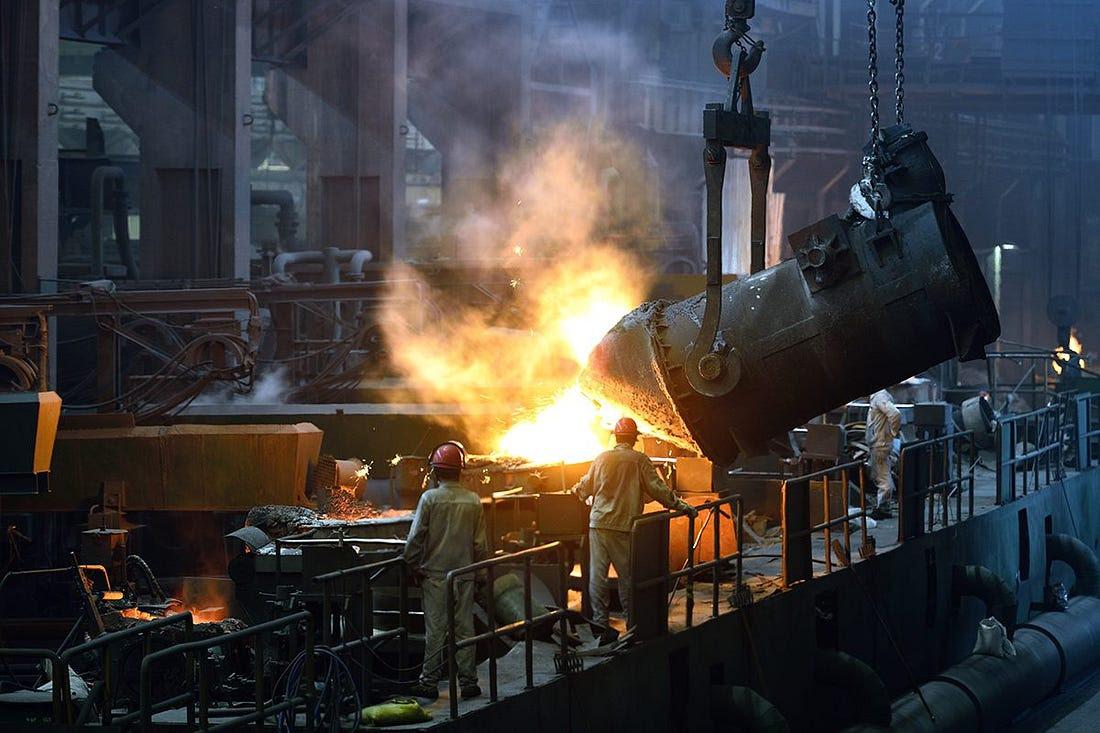
In an era where climate change demands urgent action, the steel and cement industries stand at the forefront of industrial transformation. These foundational materials underpin modern infrastructure, from towering skyscrapers to resilient bridges, yet they carry a heavy environmental toll. Steel production alone accounts for 7-11% of global CO₂ emissions, while cement contributes around 8%.As global demand for these materials surges—driven by urbanization and infrastructure development—the push toward sustainability is not just an ethical imperative but a business opportunity. This article explores the environmental burdens of steel and cement production, innovative mitigation efforts, persistent challenges, and a promising future outlook, backed by data, real-world examples, and forward-looking estimates.Beyond Carbon is a reader-supported publication. To receive new posts and support my work, consider becoming a free or paid subscriber.
The Environmental Burden of Steel Production
Steel manufacturing is energy-intensive, relying primarily on blast furnaces that burn coal to reduce iron ore, releasing vast amounts of greenhouse gases (GHGs). In 2020, the global steel industry emitted approximately 3.7 gigatons (Gt) of CO₂-equivalent annually, a figure that underscores its role as one of the largest industrial polluters.Per ton of steel produced, emissions range from 1.4 to 1.85 tons of CO₂, depending on the method used.Beyond carbon, the process consumes massive water resources—up to 4,000 liters per ton—and generates air pollutants like particulate matter and sulfur dioxide, exacerbating health issues in nearby communities.The environmental footprint extends to resource extraction: mining iron ore and coal leads to habitat destruction and soil erosion. Without intervention, projections suggest that even with demand growth, emissions could only drop by 67% to 1.2 Gt CO₂-eq by 2060 under optimistic scenarios.This highlights the urgency: steel's ubiquity in construction, automotive, and renewable energy sectors means its impacts ripple across economies.
Efforts to Mitigate Steel's Environmental ImpactFortunately, the steel industry is innovating to curb its footprint. A cornerstone strategy is increasing scrap recycling via electric arc furnaces (EAFs), which can reduce energy use by 60-70% and CO₂ emissions by 70-80% compared to traditional methods.Nucor, a leading U.S. steel producer, exemplifies this: by relying on EAFs to melt scrap, Nucor has minimized raw material needs and energy consumption, achieving one of the lowest carbon intensities in the industry.Another breakthrough is green hydrogen-based production, as seen in the HYBRIT project in Sweden. This initiative, a collaboration between SSAB, LKAB, and Vattenfall, replaces coal with hydrogen in direct reduction processes, potentially eliminating 90% of emissions.Early pilots have produced fossil-free steel, with commercial scaling underway. Additionally, companies like ArcelorMittal are partnering with automakers like Toyota to implement product-level GHG reporting, fostering transparency and supply chain accountability.Emerging green-steel hubs in regions with abundant renewable energy, such as Australia and the Middle East, are also gaining traction. These hubs leverage low-cost solar or wind power for electrolysis, producing hydrogen at scale and positioning steel as a circular economy leader.
The Environmental Burden of Cement Production
Cement production mirrors steel's challenges but with unique process-related emissions. The calcination of limestone releases CO₂ inherently—accounting for about 60% of the industry's footprint—while fuel combustion adds the rest. In 2022, global cement manufacturing emitted 1.6 billion metric tons of CO₂, representing roughly 8% of worldwide emissions. Estimates peg the sector at 5-8% of all human-caused CO₂, with each ton of Portland cement generating nearly a ton of emissions.Water usage is another concern: producing one ton requires up to 2,000 liters, straining resources in arid regions. Air pollution from kilns includes nitrogen oxides and particulates, contributing to respiratory issues. As urbanization accelerates—particularly in Asia and Africa—cement demand could double by 2050, amplifying these impacts if unchecked.
Efforts to Mitigate Cement's Environmental ImpactThe cement sector is responding with multifaceted strategies. One key approach is substituting clinker (the CO₂-intensive component) with industrial byproducts like fly ash or slag, potentially reducing emissions by 20-30%. The Global Cement and Concrete Association (GCCA) outlines a 2050 roadmap emphasizing this, alongside fuel switching to biomass or waste-derived alternatives.Innovative low-carbon cements are emerging, such as those from startups like Sublime Systems, which use electrochemistry to produce cement without high-heat kilns, slashing emissions by up to 90%.In the U.S., projects funded by the Department of Energy are piloting carbon capture, utilization, and storage (CCUS) at facilities like Heidelberg Materials' Edmonton plant, capturing over 1 million tons of CO₂ annually for sequestration.Holcim's ECOPlanet range, blending recycled materials and alternative fuels, demonstrates market-ready solutions, already reducing CO₂ by 30-50% per ton.These efforts not only lower emissions but enhance durability, appealing to eco-conscious builders.
Challenges in Achieving SustainabilityDespite progress, hurdles abound. High capital costs for retrofitting plants—often billions per facility—pose financial barriers, especially in developing economies.Technical limitations, like the inherent CO₂ release in cement calcination or steel's need for high-temperature heat, require breakthroughs in alternatives like hydrogen or CCUS, which face scalability issues.Supply constraints for low-carbon inputs, such as declining fly ash availability due to coal phase-outs, complicate adoption.Market resistance persists: "green premiums" on sustainable products can deter buyers, while regulatory inconsistencies across regions hinder global standards.Finally, workforce reskilling and infrastructure for CO₂ transport add layers of complexity.Future Outlook: A Path to Net-ZeroThe horizon is bright, with market projections signaling rapid growth. The global green steel market, valued at $7.4 billion in 2024, is expected to reach $19.4 billion by 2029, growing at a 21.4% CAGR, fueled by policies like the EU's Carbon Border Adjustment Mechanism.Similarly, green cement could expand from $654.53 million in 2024 to $1,118.04 million by 2034.By 2030, lower-emission steel and concrete could capture 20-30% market share if investments align with Paris Agreement goals, requiring a 25% emissions cut in steel alone within six years.Collaborative initiatives, like the OECD's steel outlook emphasizing innovation, predict profound changes through digital twins and AI-optimized processes.With government incentives and corporate commitments, these industries could pivot to net-zero by 2050, turning environmental challenges into economic advantages.In conclusion, sustainability in steel and cement isn't a distant dream—it's an actionable reality. By investing in green technologies today, businesses can build resilient supply chains, meet regulatory demands, and appeal to a growing eco-aware market. The path forward demands collaboration, innovation, and resolve, but the rewards—a healthier planet and thriving industries—are immeasurable. Let's forge ahead toward a sustainable future.ArcelorMittal (2024) ArcelorMittal and Toyota Tsusho Europe collaborate to advance decarbonization in the automotive supply chain. Available at: https://corporate.arcelormittal.com/media/press-releases/arcelormittal-and-toyota-tsusho-europe-collaborate-to-advance-decarbonisation-in-the-automotive-supply-chain (Accessed: 30 August 2025).Global Cement and Concrete Association (GCCA) (2021) Concrete Future: The GCCA 2050 Cement and Concrete Industry Roadmap for Net Zero Concrete. Available at: https://gccassociation.org/concretefuture/wp-content/uploads/2021/10/GCCA-Concrete-Future-Roadmap-Document-AW.pdf (Accessed: 30 August 2025).Heidelberg Materials (2024) Carbon Capture and Storage (CCS) at Edmonton. Available at: https://www.heidelbergmaterials.com/en/carbon-capture-and-storage (Accessed: 30 August 2025).International Energy Agency (IEA) (2020) *Iron and Steel Technology System: Steel Roadmap*. Available at: https://www.iea.org/reports/iron-and-steel-technology-roadmap (Accessed: 30 August 2025).MarketsandMarkets (2024) Green Steel Market by Production Process, Energy Source, End-Use Industry, and Region - Global Forecast to 2029. Available at: https://www.marketsandmarkets.com/Market-Reports/green-steel-market-242615171.html (Accessed: 30 August 2025).McKinsey & Company (2022) The future of the cement industry: Pathways to decarbonization. Available at: https://www.mckinsey.com/industries/cement/future-of-cement-industry-pathways-to-decarbonization (Accessed: 30 August 2025).Nucor Corporation (2023) Sustainability at Nucor. Available at: https://www.nucor.com/sustainability/ (Accessed: 30 August 2025).Organisation for Economic Co-operation and Development (OECD) (2023) Steel Market Developments: Q4 2023. Available at: https://www.oecd.org/industry/ind/steel-market-developments-q4-2023.pdf (Accessed: 30 August 2025).Sublime Systems (2024) Low-Carbon Cement Technology. Available at: https://sublimesystems.com/technology (Accessed: 30 August 2025).Vattenfall (2024) HYBRIT: Fossil-free steel production. Available at: https://www.vattenfall.com/hybrit/ (Accessed: 30 August 2025).