Website designed with the B12 website builder. Create your own website today.
Start for free
Renewable energy is the energy that is derived from Earth's natural resources, such as sunlight and wind; sources that are replenished faster than they are consumed. Fossil fuels—naturally occurring biological material containing hydrocarbons found within the Earth's crust—on the other hand, are non-renewable resources that take hundreds of millions of years to form. Fossil fuels, like coal, oil and gas, when burned to produce energy, cause harmful greenhouse gas emissions, such as carbon dioxide. The use of renewable energy as opposed to burning fossil fuels, releases far fewer emissions (zero emissions during generation and consumption). Fossil fuels, which account for the majority of the share of emissions today, also generate three times fewer jobs as renewable energy. The transition from fossil fuels to renewable energy remains the key task for the sustainable transformation and decarbonization of the energy industry and for adequately addressing the climate crisis.Today, a variety of incentives and subsidies exist for companies to lean on renewable sources as a source of power to help alleviate the climate crisis. However, the next generation of clean energy requires more than just incentive, it requires technological innovations to improve power generation and energy efficiency to help the world achieve net-zero emissions.Thanks for reading Beyond Carbon! Subscribe for free to receive new posts and support my work.
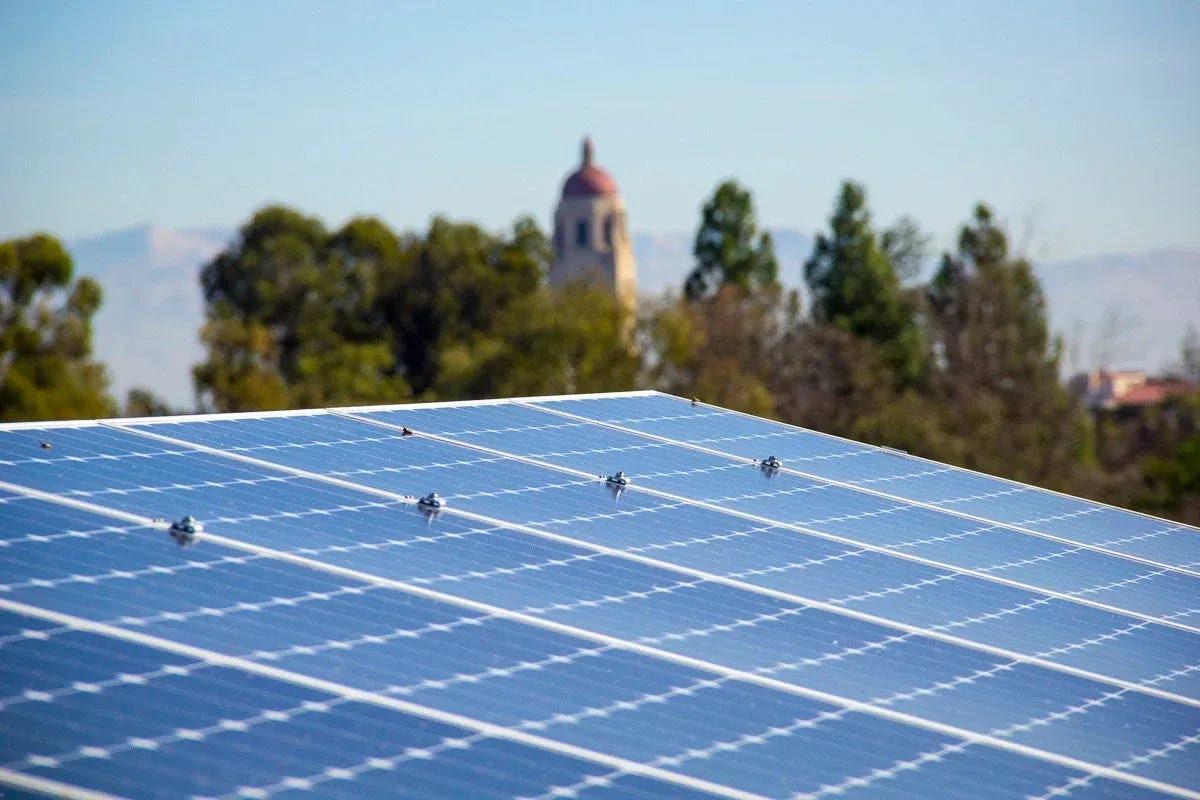
The future of the energy supply will be characterized by a shift towards renewable sources. As the world faces the twin crises of climate change and energy insecurity, renewable energy has emerged as a cornerstone of global efforts to transition to a sustainable future. Technological innovation, policy support, and societal demand are driving considerable growth in the sector. This energy transition is expected to grow significantly between now and 2050, reshaping the global energy landscape in several key ways. Below is a look at what the future holds for renewable energy across the near-, mid-, and long-term horizons.One of 11 sites of rooftop solar panel technology across the Leland Stanford Jr. University, feeding solar energy directly into campus operations. These arrays were purposefully selected from over 60 possible campus locations based on factors such as impact on historic buildings, orientation, roof size, and construction impacts.Near-Term Forecast (2025-2030)
The next five to ten years are set to witness accelerated growth in renewable energy adoption, spurred by technological advancements and policy commitments:
Solar and Wind Dominance: Solar photovoltaic (PV) and onshore wind energy will continue to dominate new capacity installations, driven by falling costs and improved efficiency . According to the International Renewable Energy Agency (IRENA), solar PV costs have dropped by 85% since 2010; further reductions in cost are expected (Wright's Law).
Energy Storage Revolution: An oft raised criticism of renewables is intermittency — both solar and wind energy are only available when sun and wind are available at a location. Breakthroughs in battery technology will make renewable energy more reliable by addressing intermittency issues. Grid-scale storage solutions, like lithium-ion and solid-state batteries, will enable wider adoption of solar and wind.
Electrification of Transport: The shift to electric vehicles (EVs) will amplify demand for renewable energy. Governments and automakers are investing heavily in EV infrastructure and renewable-powered charging networks.
Policy Drivers: Nations are committing to ambitious targets, such as the European Union’s Fit for 55 package, which aims to reduce greenhouse gas emissions by 55% by 2030. Similarly, the U.S. Inflation Reduction Act includes $369 billion for climate and energy initiatives. Likewise, in the EU, the Green New Deal aims to provide hundred percent clean energy via renewables by 2030.
Corporate Commitments: Corporations are increasingly committing to 100% renewable energy through initiatives like RE100. Tech giants such as Google and Microsoft are aiming for carbon-negative operations.Mid-Term Forecast (2030-2040)
By the 2030s, renewable energy will be deeply integrated into global energy systems, reshaping industries and lifestyles.
Grid Modernization: Smart grids equipped with AI and IoT technologies will enhance energy management, enabling dynamic load balancing and better integration of distributed energy resources.
Hydrogen Economy Emergence: Green hydrogen—produced using renewable energy—will gain traction as a critical solution for decarbonizing hard-to-abate sectors like heavy industry (production of cement, chemicals, steel etc.), shipping, and aviation.
Global Energy Access: Renewables will play a pivotal role in achieving universal energy access. Off-grid solar solutions and microgrids will electrify remote and underserved areas.
Carbon Capture Synergies: Renewables will complement carbon capture and storage (CCS) technologies to achieve net-zero emissions targets. For instance, bioenergy with CCS (BECCS) could be a source of renewable energy with negative emissions.
Job Creation and Economic Shifts: The renewable energy sector will become a significant source of employment. According to World Economic Forum, the sector could employ some 10.3 million people worldwide by 2030, offsetting the 2.7 million jobs lost to phasing out fossil fuel.Long-Term Forecast (2040-2050 and Beyond)
In the long-term, renewable energy is expected to dominate the global energy landscape, creating a sustainable and resilient energy system.
Dominance of Renewables: Renewables are projected to supply over 90% of global electricity by 2050, according to IRENA. Solar and wind, forecasted by BloombergNEF, will reach 31 TW and will be complemented by advanced geothermal, tidal, and wave energy technologies.
Fusion Power Breakthroughs: Nuclear fusion, often termed the "holy grail" of energy, could become commercially viable. Fusion’s potential to provide virtually limitless, zero-carbon energy may revolutionize the energy mix.
Decentralized Energy Systems: Prosumer-driven models, where individuals generate, consume, and sell electricity, will thrive. Blockchain and peer-to-peer energy trading platforms will support this shift.
Climate Resilience and Adaptation: Renewable energy systems will be designed to withstand climate impacts, ensuring energy security amid increasing extreme weather events.
Artificial Intelligence and Automation: AI will optimize renewable energy operations, from predictive maintenance to real-time energy forecasting, maximizing efficiency and cost savings.
Global Decarbonization Achievements: Achieving global net-zero emissions by 2050 will mark a historic milestone. The convergence of renewables with carbon-neutral technologies will stabilize global temperatures and mitigate the worst impacts of climate change.Challenges and Opportunities Ahead
While the future of renewable energy is bright, challenges such as grid stability, rare earth material supply chains, and geopolitical dynamics must be addressed. However, these challenges also present opportunities for innovation, collaboration, and investment.Conclusion
The transition to renewable energy is not just an environmental imperative but also an economic opportunity. By embracing renewables, the world can achieve a sustainable, equitable, and resilient energy future. Governments, businesses, and individuals all have a role to play in shaping this trajectory, ensuring that the energy transition benefits everyone.
Sources
Council of the European Union (2024) Fit for 55. Available online: https://www.consilium.europa.eu/en/policies/fit-for-55/ [Accessed 14.01.2025]IEA (2024) Bioenergy with Carbon Capture and Storage. Available online: https://www.iea.org/energy-system/carbon-capture-utilisation-and-storage/bioenergy-with-carbon-capture-and-storage [Accessed 14.01.2025]IRENA (2024) Renewable energy statistics 2024, International Renewable Energy Agency. Available online: https://www.irena.org/-/media/Files/IRENA/Agency/Publication/2024/Jul/IRENA_Renewable_Energy_Statistics_2024.pdf [Accessed 14.01.2025]Jonathan Touriño Jacobo (2024) BNEF: Solar and wind capacity to reach 31TW in 2050. Available online: https://www.pv-tech.org/bnef-solar-and-wind-capacity-to-reach-31tw-in-2050/ [Accessed 14.01.2025]Quickonomics (2024) Wright’s Law. Available online: https://quickonomics.com/terms/wrights-law/ [Accessed 14.01.2025]Stanford | Stanford Energy Systems Innovation (n.d.) Renewable Energy. Available online: https://sesi.stanford.edu/renewable-energy [Accessed 14.01.2025]United Nations (n.d.) What is renewable energy? Available online: https://www.un.org/en/climatechange/what-is-renewable-energy [Accessed 14.01.2025]U.S. Department of the Treasury (n.d.) Inflation Reduction Act. Available online: https://home.treasury.gov/policy-issues/inflation-reduction-act
© 2025 Faizan Ahmed Jalal
Unsubscribe